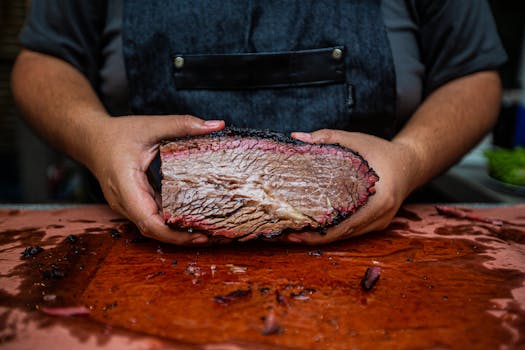
Alright, class, listen up. Forget what the little sticker says. In my years carrying a badge and a thermometer, the first thing I learned is that a "sell-by" date is, at best, a polite suggestion. The true forensic examination of a piece of beef begins the moment it hits your countertop. Consider that surface your sterile field, and your own senses—sight, smell, and touch—are the most finely calibrated diagnostic tools you'll ever own. We're not looking for hints; we're hunting for indisputable proof of decomposition.
Let's begin the post-mortem.
Phase One: The Ocular Survey
Before you even think about bringing that steak near your nose, perform a meticulous visual sweep from a distance. Microbial contamination, for all its stealth, is a sloppy business and always leaves behind damning physical evidence.
- Hue and Pigmentation: First, let's talk about the warning signs. Do you see any greenish or blackish blooms? That isn't a new type of artisanal seasoning, my friend; that's a full-blown microbial crime scene. A widespread, deathly grey pallor is another non-negotiable dealbreaker, signaling that the meat is well past its prime. Now, don't get thrown by a bit of surface browning. That's just oxidation, a harmless chemical reaction where the protein myoglobin meets oxygen—the same thing that happens to a sliced apple. A pristine cut of beef will present with a glorious, vibrant cherry-red or even a deep purplish tone. That’s the hallmark of freshness.
- Surface Topography: Here is where many a home cook is led astray. A wholesome steak possesses a natural, healthy moisture. A compromised one, however, develops a distinct, viscous biofilm that clings to the surface. To put it in terms from my old job: a fresh steak’s surface has the subtle gleam of a properly sanitized counter, while a spoiled one has the iridescent, slimy sheen of an oil slick in a dirty puddle. This sticky, almost tacky film is the undeniable residue of bacterial colonies, like Pseudomonas, having a party on your dinner. If it looks slick and sticky, you've already found your culprit.
Phase Two: The Nasal Cross-Examination
Your nose is the most sophisticated vapor detector in your arsenal, capable of identifying the volatile compounds of decay long before they're visible. This isn't just a casual sniff; this is an interrogation.
1. The Scent of Putrefaction: True spoilage has a voice, and it screams. An unmistakably foul odor doesn’t just whisper "off"; it announces its presence with specific, acrid notes. Are you detecting a sharp whiff of ammonia or something like bleach? That's putrefaction in progress. Is it a sulfurous, rotten-egg stench? That's another open-and-shut case of decomposition. Perhaps the most treacherous is a cloyingly sweet yet foul smell, a repulsive perfume entirely alien to the clean, savory aroma of wholesome beef.
2. The "Confinement Funk" Red Herring: Now, before you condemn the meat, know this: upon opening a vacuum-sealed package, a slightly sour or metallic tang is common. This is "confinement odor," a harmless result of the oxygen-starved environment. Don't jump to conclusions. Place the steak on a plate, give it 10 to 15 minutes of exposure to the air, and then re-evaluate. If that initial funk dissipates entirely, leaving behind only a clean, beefy fragrance, the steak is exonerated. It was a false lead. If any of the foul scents mentioned above persist, however, its guilt is confirmed.
Phase Three: Manual Verification
Your final confirmation comes from direct physical contact, verifying what your eyes may have already suspected.
- The Tactile Integrity Check: A prime cut of beef should feel firm to the touch, its muscle fibers resilient, springing back after a gentle press. As bacteria break down the proteins, the meat loses its structural integrity. If the texture has become flaccid, mushy, or overly soft—more like a damp sponge than a robust muscle—the evidence has been irreparably corrupted.
- The Blot Test: This was a go-to technique in the field. Take a clean paper towel and gently pat the steak's surface. With a fresh piece, the towel will come away slightly damp, maybe with a faint pinkish stain from myoglobin (which, I’ll remind you, isn’t blood). But if the steak is spoiled, that paper towel will pick up a slimy, sticky residue, sometimes even clinging to the meat. That tackiness is the physical proof of the bacterial biofilm you spotted earlier.
There you have it. The date on the package is the beginning of the story, not the end. Trust your senses—they're the only inspectors that matter in your kitchen.
Alright, let's get this kitchen in order. I've seen things in coolers that would make a sanitation manual weep. The biggest mistake I see home cooks make? Putting blind faith in a printed date. Let's correct that protocol right now.
The Final Assessment: Your Senses Are the Only Authority That Matters
So, why do I insist on teaching this hands-on, sensory investigation? Because to place unconditional faith in a stamped "sell-by" date is, frankly, a complete abdication of your role as the final checkpoint in the food safety chain.
From my days in the field, I can tell you those dates are largely arbitrary guideposts for peak retail quality, not non-negotiable drop-dead deadlines for safety. They represent the manufacturer's promise of optimal flavor and texture, a far cry from a definitive verdict on microbial activity. The integrity of that printed date is compromised by a dozen variables it can never predict: the temperature fluctuations in the supermarket's display case, the teenager who bagged your groceries, or that extra 20 minutes your steak spent in a hot car. Relying solely on that date is like trying to perform a full restaurant inspection armed with nothing but the menu.
Cultivating your own sensory toolkit provides three non-negotiable advantages:
1. It Fortifies Your Health. Your senses operate as a sophisticated, real-time bio-scanner, far more attuned to immediate reality than a factory stamp from last Tuesday. They will be the first to alert you if a prime cut of meat, though technically "in date," suffered a break in the cold chain and has already begun to turn. This is your personal, unbreachable firewall against foodborne illness.
2. It Champions Fiscal and Ethical Responsibility. The most immediate dividend of this skill is preventing perfectly viable—and often costly—protein from ending up in a landfill due to "date anxiety." Learning to distinguish the harmless, slightly metallic scent of oxidation from the genuinely sour funk of spoilage is an act of conservation. It saves you capital and, more importantly, honors the resources and the animal's sacrifice that produced the food.
3. It Unlocks Culinary Mastery. True culinary artistry begins when you understand your ingredients on an elemental level. Discerning the difference between a steak with the benign patina of age and one that's truly past its prime is the gateway to grasping advanced practices like controlled dry-aging. The world's most gifted chefs are, at their core, master assessors of their raw materials.
Here’s the clearest way I can put it: A 'best-by' date is the manufacturer's sheet music—a rigid, generic script. Your senses, honed and trusted, are the conductor. The sheet music provides a basic tempo, but it’s the conductor who hears the single violin playing a sharp, sour note, a dissonant chord of decay that warns the entire performance is at risk. Developing that internal, finely calibrated instrument is the most crucial skill for any serious cook. It marks the transition from merely executing instructions to genuinely comprehending the alchemy of food.